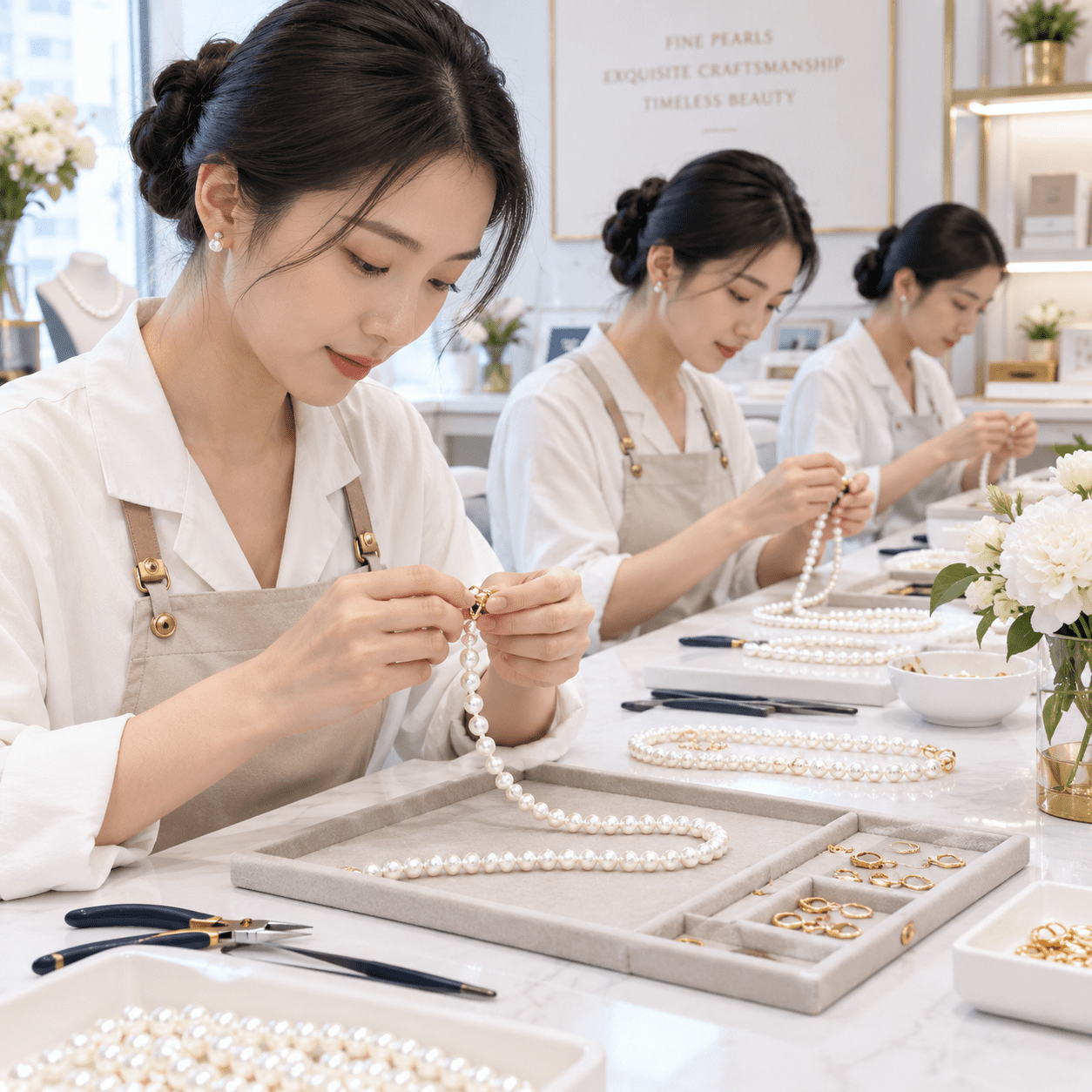
Pearl necklaces are timeless pieces of jewellery, admired for their natural lustre, elegance and understated beauty. Whether worn for a wedding, a special occasion or as an everyday accessory, a pearl necklace is a classic addition to any jewellery collection. However, creating a beautiful pearl necklace involves much more than simply threading pearls onto a string. It requires careful selection, expert craftsmanship and attention to detail at every stage.
From choosing pearls of consistent size and colour to selecting the right silk thread, knotting between each pearl and fitting the perfect clasp, every element contributes to the necklace's quality, durability and appearance.
In this guide, we explore how pearl necklaces are made, why traditional silk threading remains popular, the importance of knotting between pearls, how clasps are chosen and why pearl uniformity matters.
1. Selecting the Pearls: The Foundation of a Beautiful Necklace
The first step in making a pearl necklace is selecting the pearls. This is one of the most important stages because the quality, appearance and consistency of the pearls determine the finished necklace's overall look.
Pearls can be cultured in different environments, including freshwater and saltwater. Freshwater pearls are often valued for their variety of shapes and colours, while saltwater pearls, such as Akoya, Tahitian and South Sea pearls, are prized for their distinctive characteristics and lustre.
When selecting pearls for a necklace, jewellery makers consider several important factors:
Lustre: The intensity and sharpness of the reflections on the pearl's surface. Strong lustre gives pearls their characteristic glow.
Size: Pearls should be selected to create the desired necklace length and appearance, with consistent sizing often preferred for a classic strand.
Colour: Pearls may be white, cream, pink, golden, grey, black or other natural shades. Matching their tones helps create a harmonious design.
Shape: Round pearls are traditionally popular for formal necklaces, although oval, button and baroque pearls offer alternative styles.
Surface quality: The number and visibility of natural blemishes influence the overall appearance and grading of the pearls.
Why Is Uniformity Important in Pearl Necklaces?
Uniformity is essential when creating a traditional, elegant pearl necklace. When pearls are similar in size, shape, colour and lustre, the finished strand looks balanced, coordinated and beautifully proportioned.
For example, a necklace made with evenly matched round white pearls creates a classic, symmetrical appearance. If the pearls vary significantly in size or colour, the necklace may look less consistent, unless the variations are intentional elements of the design.
Pearl matching is a skilled process. Even pearls that appear similar at first glance can differ in their undertones, surface characteristics and reflections. Jewellery makers examine the pearls carefully, arranging and rearranging them until they achieve the desired result.
Perfect uniformity is not always necessary. Some contemporary pearl necklaces deliberately feature graduated sizes, contrasting colours or irregular shapes. In these designs, variation becomes part of the necklace's character rather than a flaw.
2. Why Is Silk Thread Used for Pearl Necklaces?
Silk thread has traditionally been one of the most popular materials used to string fine pearl necklaces. Its natural softness, flexibility and elegant drape make it particularly suitable for delicate pearls.
Unlike a stiff or rigid stringing material, silk allows a necklace to move naturally around the neck. This flexibility helps the pearls sit comfortably and follow the wearer's neckline.
There are several reasons why silk thread is valued in traditional pearl jewellery.
Flexibility and drape: Silk thread allows the necklace to hang smoothly, helping the pearls move naturally rather than appearing stiff or rigid.
A gentle material for pearls: Pearl nacre is relatively delicate compared with many gemstones. A soft thread can help reduce direct contact between neighbouring pearls when knots are placed between them.
Traditional craftsmanship: Silk has a long history in fine jewellery making. Its use is associated with traditional pearl-stringing techniques and the careful hand-finishing of classic pearl necklaces.
A natural-looking finish: Silk thread is available in different colours, allowing the stringing material to complement the pearls and remain discreet within the finished design.
However, silk is not maintenance-free. It can weaken over time through wear, moisture, perspiration and repeated movement. For this reason, pearl necklaces strung on silk may need restringing periodically, depending on how frequently they are worn and how well they are cared for.
Modern jewellery makers may also use specialist synthetic threads, nylon or other durable stringing materials. The best choice depends on the necklace design, the pearls being used and the intended balance between traditional craftsmanship and practical durability.
3. Why Are Pearls Knotted Between Each Pearl?
One of the most recognisable features of a traditionally strung pearl necklace is the small knot between each pearl. These knots may look like a minor detail, but they serve several important purposes.
Protection Against Scratches and Damage
Pearls have a surface made from layers of nacre, which can be scratched or damaged by contact with other pearls or harder materials. Knots create a small buffer between neighbouring pearls, reducing direct rubbing and helping preserve their surface.
Preventing Pearls From Falling Off
Knots also provide an important safety feature. If the thread breaks, individually knotted pearls are less likely to slide off the strand all at once. The knots can help keep most of the pearls contained rather than allowing them to scatter across the floor.
This is particularly valuable when working with valuable or sentimental pearl necklaces.
Improving the Necklace's Appearance
Knotting helps pearls sit neatly along the strand, creating a more refined finish. It can also prevent the pearls from bunching together, helping maintain a smooth and balanced appearance.
When performed correctly, the knots should be small, consistent and close to the pearls without putting excessive pressure on them.
How Are Pearls Knotted?
Pearl stringing usually begins by preparing the thread and attaching one end to the chosen clasp or finding. The pearls are then threaded in the correct order.
After each pearl is positioned, the stringer creates a knot before adding the next pearl. This process continues until the necklace reaches the desired length. The final section of thread is secured to the other end of the clasp.
Knotting by hand requires patience and precision. Knots that are too loose can make the necklace look untidy, while knots that are too tight may create unnecessary strain on the thread.
The result is a strand in which each pearl is individually separated, protected and carefully positioned.
4. Choosing the Right Clasp for a Pearl Necklace
The clasp is another important part of pearl necklace construction. Although it may appear to be a small finishing detail, the clasp affects the necklace's security, usability and overall style.
There are several types of clasps commonly used for pearl necklaces.
Box Clasps
Box clasps are popular for traditional pearl necklaces. They typically feature a shaped fitting that clicks into place and may include an additional safety mechanism. Their compact design can complement a classic strand without distracting from the pearls.
Fishhook Clasps
Fishhook clasps have a decorative, curved design and are often used for elegant or traditional jewellery. They can provide an attractive finishing detail, particularly when the clasp is made from precious metal.
Lobster Clasps
Lobster clasps use a spring-loaded mechanism to connect the ends of the necklace. They are practical and widely used in contemporary jewellery, offering a familiar fastening system.
Screw Clasps
Screw clasps fasten by twisting two components together. They can provide a secure connection when properly made and maintained.
How Do You Choose the Best Clasp?
The choice of clasp depends on the necklace's design, value, weight and intended use. Precious-metal clasps, such as gold or sterling silver, may complement fine pearls, while other materials can suit more affordable or contemporary designs.
Security is particularly important. The clasp should be suitable for the weight of the necklace and easy for the wearer to operate without compromising the strand's safety.
A well-chosen clasp also contributes to the finished appearance. In a traditional pearl necklace, the clasp should complement the pearls rather than overwhelm them.
5. Measuring and Arranging the Pearls
Once the pearls have been selected and matched, the jewellery maker arranges them in the intended sequence.
For a uniform necklace, this may involve placing pearls of similar size and colour together. For a graduated necklace, larger pearls may be positioned at the centre, with progressively smaller pearls towards the clasp.
The desired necklace length is also considered at this stage. Common styles include shorter necklaces that sit close to the base of the neck, classic princess-length strands and longer necklaces that can be worn in different ways.
The maker must account for the knots between the pearls, as well as the length of the clasp. These details influence the final dimensions and the way the necklace sits when worn.
Careful arrangement helps ensure that the finished necklace looks balanced from every angle.
6. The Stringing and Finishing Process
After the pearls have been matched and arranged, the necklace is assembled.
The stringer prepares the thread, attaches the clasp and carefully threads the pearls in the planned order. If the necklace is individually knotted, a knot is made between each pearl.
Once all the pearls have been threaded, the stringer secures the final end and checks the fastening. The necklace is then inspected to ensure the knots are consistent, the pearls sit correctly and the clasp operates as intended.
Quality control is an essential part of the process. The finished necklace should hang naturally, with the pearls arranged evenly and the thread securely attached.
Depending on the necklace's construction, the maker may also check for gaps between knots, uneven spacing, loose connections or pearls that do not match the intended design.
These finishing details distinguish a carefully made pearl necklace from a strand that has simply been assembled.
7. Caring for a Silk-Strung Pearl Necklace
Even a beautifully made pearl necklace requires proper care to maintain its appearance and condition.
Pearls are sensitive to chemicals, cosmetics and excessive moisture. To help protect them, follow these simple guidelines:
Put your pearl necklace on after applying perfume, hairspray, moisturiser and cosmetics.
Wipe the pearls gently with a soft, clean cloth after wearing them.
Avoid soaking a silk-strung necklace in water or using harsh jewellery cleaners.
Store the necklace separately from harder jewellery to minimise scratches.
Avoid pulling or stretching the thread.
Have the necklace inspected periodically, particularly if the silk looks worn, discoloured or frayed.
If the pearls begin to move excessively along the strand, the knots appear loose or the thread shows signs of wear, it may be time to have the necklace professionally restrung.
Regular maintenance helps protect both the pearls and the craftsmanship that holds them together.
The Art of Making a Pearl Necklace
Making a pearl necklace is a process that combines careful pearl selection, traditional stringing techniques and thoughtful finishing. Every decision, from matching the pearls to selecting the thread and clasp, contributes to the quality and character of the finished piece.
Silk thread offers flexibility and a graceful drape, while knots between individual pearls help protect their surfaces and reduce the risk of losing them if the thread breaks. Uniformity creates a balanced, harmonious appearance, and a well-chosen clasp provides both security and style.
Whether you prefer a classic strand of evenly matched white pearls or a contemporary design featuring unusual shapes and colours, understanding how pearl necklaces are made can help you appreciate the craftsmanship behind them.
A beautifully crafted pearl necklace is more than an accessory. It is a combination of natural beauty, thoughtful design and skilled workmanship that can be treasured for years to come.
https://www.pearljewelleryonline.com/pearl-necklaces-10-c.asp


